
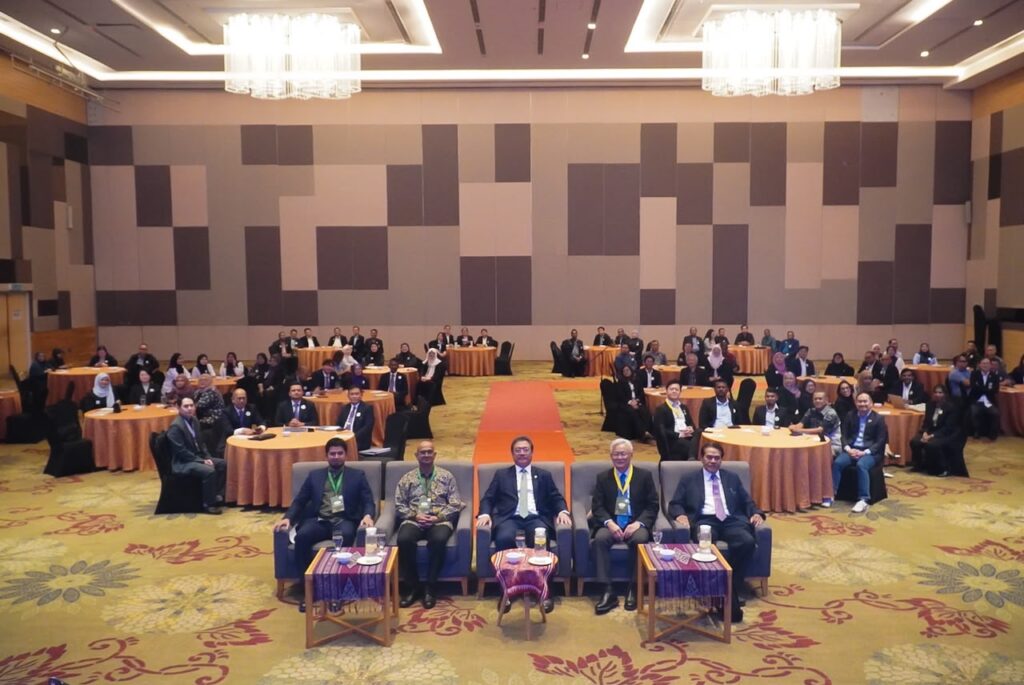
Dr Hazland (seated centre) and other dignitaries in a group photo during the conference.
KUCHING (Oct 6): The Zero Waste Management 2.0 Conference 2026 is expected to provide participants with greater awareness of the frameworks needed to support Sarawak’s transition towards a sustainable and circular economy, said Datuk Dr Hazland Abang Hipni.
The Deputy Minister of Energy and Environmental Sustainability said meaningful climate mitigation and the green transition required robust regulatory, technical, financial and talent development frameworks before large-scale sustainability projects could be undertaken.
Speaking at the conference here yesterday, Dr Hazland said the regulatory framework was among the most important foundations for climate mitigation initiatives.
“All this must be done accordingly to the rules, to the ordinances, to the laws, to the certification, verification—you know, so we must have all the proper bodies, agencies to verify,” he said.
He said outdated laws should also be amended where necessary to facilitate Sarawak’s transformation and transition towards its climate goals, including achieving net-zero emissions by 2050.
The two-day conference brings together policymakers, local authorities, businesses, financial institutions, ESG practitioners, zero-waste pioneers, NGOs, technology providers, educators and community leaders to explore innovative strategies, exchange best practices and develop practical solutions for a circular future.
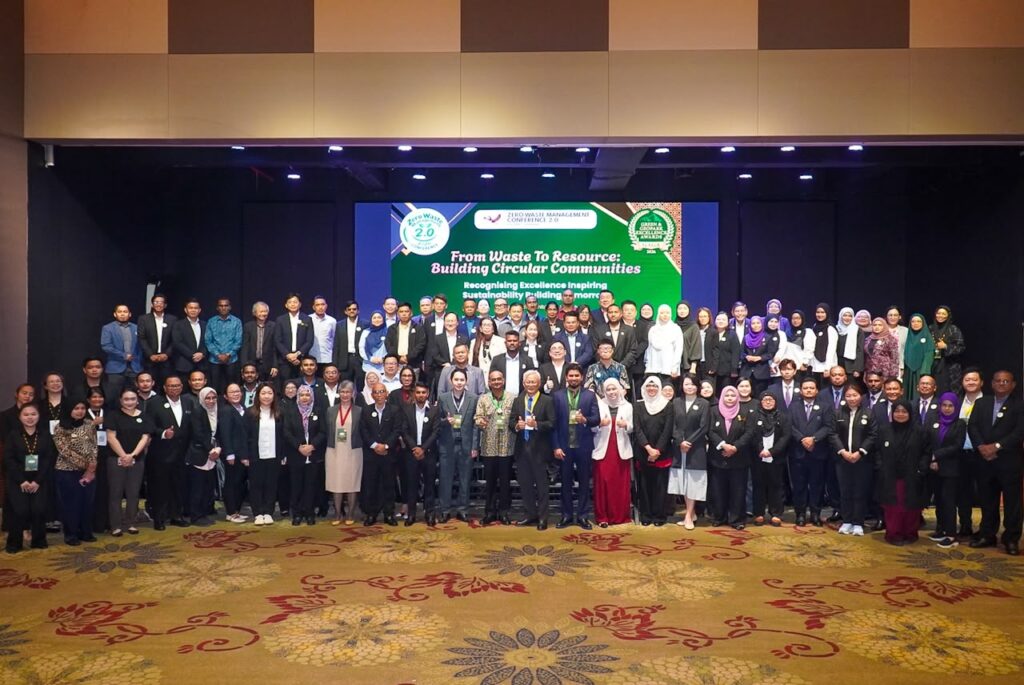
The conference is being held alongside the Green and Geopark Excellence Awards (GAGA) 2026.
On the technical framework, Dr Hazland said technology was needed to support various initiatives, including wastewater treatment and management.
However, he said the technical framework should no longer pose a major challenge to Sarawak, pointing to the establishment of Sarawak Water Sdn Bhd and Sarawak Energy Bhd, which manages the state’s hydropower, solar and electricity sectors.
He said the most challenging framework was the financial, business development and taxation framework, as many financial institutions remained reluctant to finance green initiatives, particularly new and emerging areas.
To address this, he said Sarawak was working with international financial institutions such as the World Bank and Asian Development Bank, while also leveraging its own financial institutions, including Affin Bank and Development Bank of Sarawak (DBOS), as well as attracting major global investors.
“That’s how we work, that’s how we manoeuvre through these financial challenges for Sarawak. Because Sarawak, we have to work on our own, we cannot depend on any external assistance anymore,” he said.
On the fourth framework, namely human resource and talent development, Dr Hazland underscored the importance of developing a skilled workforce capable of supporting Sarawak’s sustainability and economic transformation.
He also said Sarawak already had its own Waste-to-Energy policy, which he described as the first of its kind in Malaysia.
The policy covers various waste streams, rather than focusing solely on wastewater, he added.
He said the total estimated potential energy generation from agricultural biomass, wood biomass from sustainable forests, municipal solid waste and animal waste stood at 1,330 megawatts (MW), or equivalent to about half of the capacity of the Bakun Hydroelectric Plant.
“Water is not that much; it is maybe leachate and sewage water, and so on. Now we are talking more about energy. So we have all the different types of energy.”
Dr Hazland said Sarawak would further develop its Waste-to-Energy programme next year, including the construction of at least two incinerators.
“We’ll be building two, at least two incinerators—one in the north, the other in the south—and this will be able to produce new energies in the next three years,” he said.
Also present were Penang Island City Council mayor Dato Rajendran P. Anthony and Pengurusan Aset Air Berhad chairman Datuk Seri Jaseni Maidinsa.
By Kentigern Minggu